Google Translation English To Japanese

There’s something oddly satisfying about typing a phrase into Google Translate and watching it transform into Japanese characters. It feels a bit like magic, even if you know...

There’s something oddly satisfying about typing a phrase into Google Translate and watching it transform into Japanese characters. It feels a bit like magic, even if you know it’s just a clever algorithm. Whether you’re planning a trip to Tokyo, trying to read a manga without subtitles, or just curious about how to say “fluffy octopus” in Japanese, this tool has a way of making a complex language feel surprisingly accessible. It’s practical, it’s fun, and it’s become a quiet hero for millions of people who just want to connect across cultures.
At its core, Google Translate English to Japanese exists to break down barriers. For travelers, it can turn a confusing menu into an edible adventure. For students, it’s a quick lifeline when memorizing kanji feels overwhelming. And for friends or family who speak different languages, it’s a bridge—clunky at times, but genuine. The main benefit is speed; you don’t need a textbook to ask for directions or send a polite email. It gives you a starting point, which is often all you need to start a conversation.
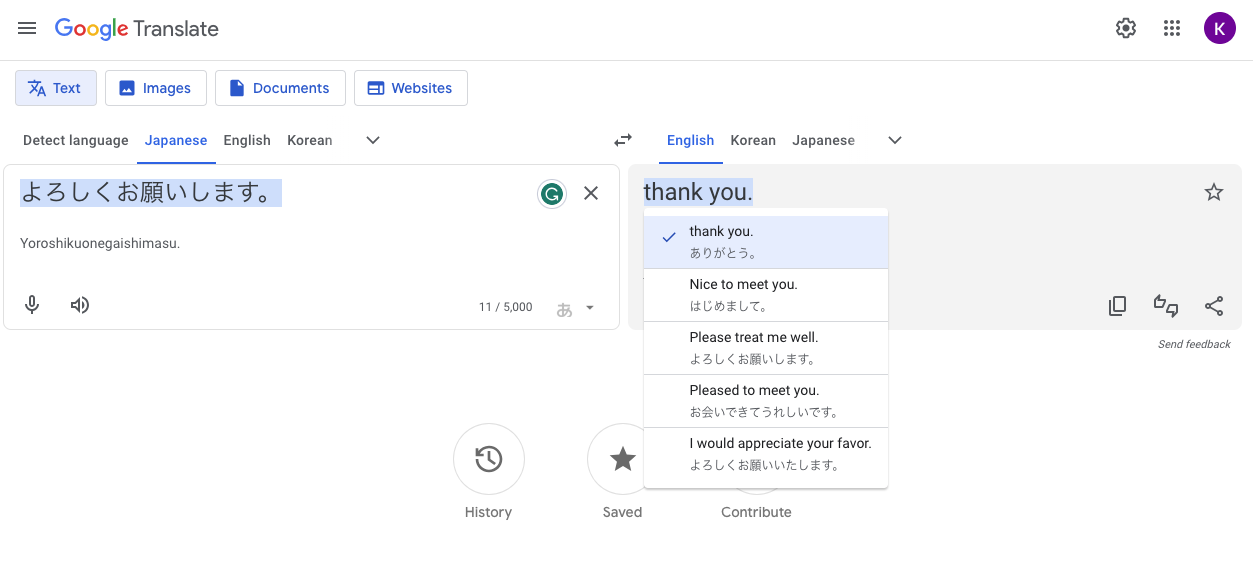
You’ve probably seen its quirks firsthand. Type “I love you” in English, and you get a perfectly formal 愛しています (aishiteimasu). But try something playful like “I’m dead tired,” and you might end up with 私は死んで疲れています, which literally means “I am dead and tired.” These moments are golden—not failures, but reminders that language is alive. You can also flip it: paste a Japanese sentence in, and watch it guess the meaning. It’s not perfect, but it’s often close enough to get the gist, especially with common phrases like greetings or numbers.
Must Read
To really make the most of it, start small. Don’t feed it long paragraphs full of slang or idioms—the translation will likely wobble. Instead, break your sentences into short, clear chunks. For example, instead of “Could you please tell me where the nearest train station is?” try “Where is the train station?” It’s less polite in English, but the Japanese output will be much more accurate. Another tip: use the speaker icon to hear the pronunciation. Japanese pitch can be tricky, and hearing it helps you mimic the rhythm.
Try a simple trick: translate a common phrase like “good morning” (おはようございます), then copy the Japanese back into the English side. It should come out close to the original. If it doesn’t, you’ve spotted a nuance. This two-way check is a lifesaver for avoiding embarrassing mistakes. Also, remember that Japanese has formal and casual versions. If you’re writing to a boss, stick with the polite forms the tool often defaults to; for friends, you might need to tweak it manually later.
 Google english japanese translator - kdacurrent
The real joy comes when you stop treating it as a perfect oracle and start treating it as a playful tool. Experiment wildly. Translate your favorite song lyric. Try “Where is the bathroom?” and then “I want sushi.” See how the sentence structure changes. You’ll notice that Japanese often puts the verb at the end, which is a great lesson in itself. And when the translation makes you laugh—because it will—share it with a friend. That’s the point: to learn, to connect, and to have a little fun along the way.
So go ahead, open that browser tab. Type something simple, hit enter, and see what happens. You might just surprise yourself with how much you can grasp, even if it’s just “hello” and “thank you.” In a world that sometimes feels big and disconnected, Google Translate English to Japanese is a small, friendly bridge—and it’s waiting for you to cross it.