What Language Is Spoken In Nigeria
Welcome to one of the most linguistically exciting places on Earth! If you’ve ever wondered what language is spoken in Nigeria, you’re in for a treat. This isn’t a simple one-...

Welcome to one of the most linguistically exciting places on Earth! If you’ve ever wondered what language is spoken in Nigeria, you’re in for a treat. This isn’t a simple one-answer question—it’s a vibrant puzzle with over 500 pieces. Understanding Nigeria’s languages is like unlocking a secret map to its culture, music, and business. Whether you’re planning a trip, making a new friend, or just love trivia, this knowledge gives you a surprising advantage: you can instantly connect with millions of people on a deeper level.
Let’s start with the official language: English. Thanks to British colonial history, English is Nigeria’s lingua franca. It’s used in government, schools, and formal media. But here’s the fun part—Nigerians have made it their own. You’ll hear “Pidgin English,” a playful, fast-paced mix of English and local words. For example, “How you dey?” means “How are you?” and “I go chop” means “I will eat.” If you learn a few Pidgin phrases, locals will instantly warm up to you.
Now, the real magic happens with Nigeria’s three major native languages: Hausa, Yoruba, and Igbo. Each represents a massive ethnic group and region. Hausa is spoken in the north, and you’ll often hear it in bustling markets and lively radio shows. Yoruba dominates the southwest—it’s the language of Afrobeat legend Fela Kuti’s lyrics. Igbo is the soul of the southeast, famous for its proverbs and energetic storytelling. Imagine greeting a Yoruba elder with “Ẹ káàbọ̀” (Welcome)—you’ll earn a gleaming smile.
Must Read
But wait—there are hundreds more! From Fulani and Kanuri to Efik and Tiv, every village might have its own dialect. A creative idea: try a “language scavenger hunt” online. Search for Nigerian movies (Nollywood) in Yoruba or Igbo, or listen to Hausa rap on YouTube. You’ll hear how each language has its own rhythm and humor. For instance, in Igbo, the word “ofe” means soup, but the tone you use changes whether you’re talking about food or someone’s face—hilarious mix-ups happen all the time!
Here’s a practical tip if you want to dip your toes in: start with greetings. Nigerians love it when you try. Learn “Sannu” (Hello in Hausa), “Bawo ni?” (How are you? in Yoruba), and “Kedu?” (How are you? in Igbo). Then, add the universal Pidgin phrase “Wetin dey happen?” (What’s up?). Use these with a smile, and you’ll break the ice instantly. You don’t need fluency—just curiosity.
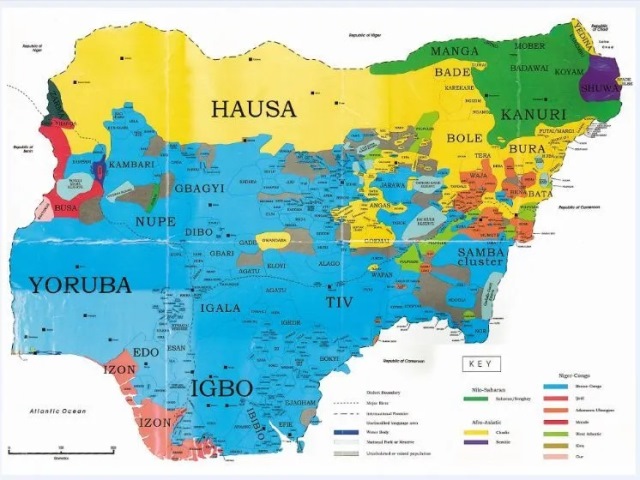 Exploring the Diverse Languages of Nigeria
Another awesome advantage of exploring Nigerian languages is the music. Afrobeat giants like Burna Boy and Wizkid mix Yoruba, Pidgin, and English in their songs. You can learn whole phrases just by singing along. Try dancing to “On the Low” by Burna Boy—when he says “Omo, I dey play,” you’re already speaking Pidgin. Before you know it, you’ll be understanding layers of meaning in Nigeria’s global hits.
In short, the “language” of Nigeria is a colorful tapestry of English, Pidgin, and hundreds of mother tongues. It’s a joyful reminder that communication isn’t about one correct answer—it’s about connection. So go ahead, pick one phrase, and say it with confidence. You’ll discover that in Nigeria, every word is an invitation to a party, a story, or a new friendship.


